Chasing Light and Soul in Accra: Where Every Frame Tells a Story
Have you ever felt a city speak to you through its colors, rhythms, and quiet moments? Accra isn’t just Ghana’s capital—it’s a living canvas. From golden sunrises over Labadi Beach to the vibrant chaos of Makola Market, I discovered that the best photos aren’t taken, they’re felt. This is about finding those raw, authentic angles that turn snapshots into stories. In a world where travel photography often leans on clichés, Accra invites something deeper: a chance to capture not just what a place looks like, but how it breathes, moves, and remembers. It’s a city where every corner hums with life, and every photograph can become a window into a soul.
The Rhythm of Accra: Why This City Photographs Differently
Accra does not reveal itself all at once. It unfolds in layers—sound by sound, color by color, gesture by gesture. Unlike cities shaped by rigid urban planning, Accra thrives on organic movement. Its visual identity is a blend of colonial architecture, Afro-futuristic street fashion, weathered signage in bold Fante script, and the constant flow of tro-tro minibuses painted in electric hues. These elements do not compete; they coexist in a rhythm that feels both chaotic and harmonious. For photographers, this means every frame carries texture, contrast, and narrative potential. The city doesn’t just offer subjects—it offers stories waiting to be seen.
What sets Accra apart is how deeply culture informs its visual landscape. A woman balancing a basket of plantains on her head isn’t merely a picturesque moment; she’s part of a centuries-old tradition of market trade and communal labor. A tro-tro adorned with the phrase "God is Love" isn’t just decoration—it reflects the spiritual undercurrent that runs through daily life. When photographing in Accra, understanding context elevates the image from aesthetic to meaningful. It shifts the focus from capturing what is unusual to honoring what is real. This awareness allows photographers to move beyond surface-level observation and connect with the heartbeat of the city.
To photograph Accra well is to slow down, observe, and listen. It means learning the pace of the streets, recognizing recurring patterns, and respecting personal space. The city rewards patience. A street vendor may initially wave you away, but a simple greeting in Twi—"Maakye" (good morning)—can open doors. Over time, you begin to see the rhythm not as noise, but as music. The honking of horns, the call of hawkers, the laughter spilling from roadside chop bars—all become part of the composition. In this way, photography in Accra becomes less about technical perfection and more about emotional resonance. The most powerful images are often those taken after waiting, after building trust, after allowing the moment to find you.
Golden Hour Magic: Beachfront Views That Steal Your Breath
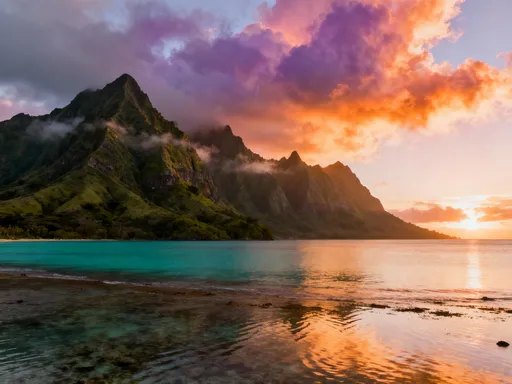
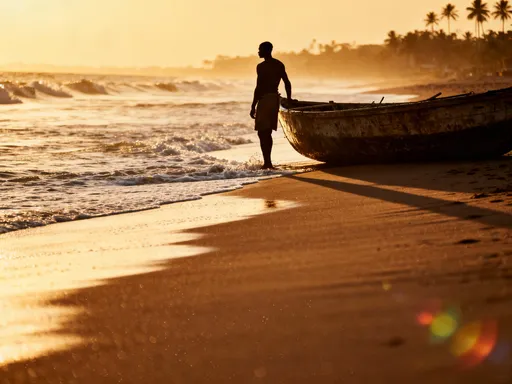
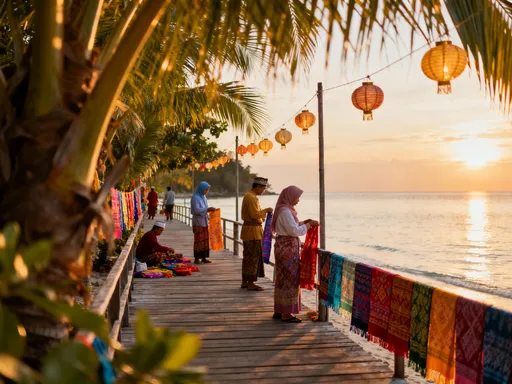
If light is the soul of photography, then Accra’s coastline offers some of its purest expressions. Labadi Beach and Laboma Beach, stretching along the Gulf of Guinea, provide unmatched opportunities for capturing the city’s relationship with the sea. At sunrise, the sky melts into soft pinks and golds, casting a gentle glow over fishermen hauling their colorful wooden boats ashore. By sunset, the horizon ignites in fiery oranges and deep purples, silhouetting families strolling along the shore and children flying kites made from plastic bags and sticks. These moments are fleeting, but they leave lasting impressions—both on the heart and the memory card.
The golden hours—roughly 30 minutes after sunrise and before sunset—are when Accra’s beaches come alive with photographic potential. The low angle of the sun creates long shadows, enhances textures, and adds depth to compositions. Waves catching the light look like liquid gold, while wet sand acts as a natural reflector, softening contrasts. For photographers, this is the ideal time to experiment with silhouettes, reflections, and backlighting. A lone fisherman walking toward the water, his net slung over his shoulder, becomes a powerful symbol of resilience when framed against a blazing sky. A group of women selling coconuts near the shore gains warmth and dimension under the morning light.
Practical considerations matter when shooting along the coast. While both Labadi and Laboma are accessible and generally safe for visitors, it’s important to remain aware of surroundings. Avoid wandering too far from populated areas, especially at dusk. Always ask permission before photographing individuals, particularly those engaged in work. Fishermen, for instance, may be willing to pose if approached respectfully and offered a small token of appreciation. In terms of gear, a wide-angle lens works well for capturing expansive seascapes, while a telephoto lens allows for intimate details without intrusion. Use a polarizing filter to reduce glare on water and enhance sky contrast. And remember: while settings vary, a low ISO (100–200), aperture around f/8–f/11, and shutter speed adjusted for motion will help preserve detail in changing light.
Markets Alive: Capturing the Pulse at Makola and Kaneshie
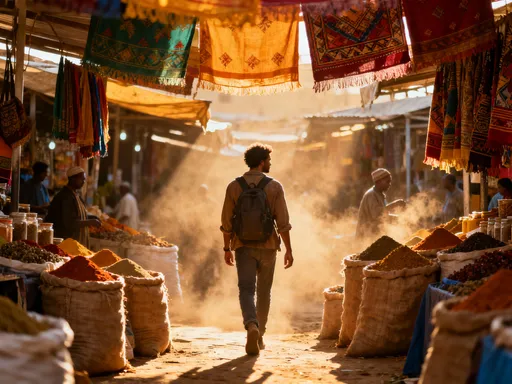
No visit to Accra is complete without stepping into the whirlwind of its markets. Makola Market, in particular, stands as a sensory explosion—a labyrinth of narrow alleys piled high with textiles, spices, electronics, and fresh produce. Here, color is not an accent; it is the language. Towering pyramids of red bell peppers, mounds of yellow turmeric, and bolts of kente cloth in every imaginable pattern create a visual feast. The air hums with barter, laughter, and the sizzle of street food. For photographers, this is where spontaneity meets storytelling. Every turn offers a new subject: a vendor fanning her goods with a palm frond, a child balancing a tray of sachet water on his head, an elder woman braiding hair under a faded umbrella.
Yet, photographing in such spaces requires sensitivity. Makola is not a stage; it is a workplace, a community hub, and for many, a lifeline. Ethical street photography begins with respect. Rather than snapping quick shots from a distance, take time to engage. A smile, a brief conversation, and a polite request—"Can I take your photo?"—go a long way. Many vendors are open to being photographed, especially if they feel acknowledged. Some may even pose proudly, adjusting their hats or arranging their wares. In return, consider purchasing something small—a bottle of water, a snack—as a gesture of goodwill. This exchange fosters trust and results in more authentic, dignified images.
Kaneshie Market, though slightly less crowded, offers similar richness. Its open-air sections provide excellent natural lighting, particularly in the late morning when sunlight filters through makeshift canopies. Look for moments of stillness amid the motion: a tailor focused on his sewing machine, a mother nursing her baby in a shaded corner, or a stack of secondhand shoes arranged like art. These quieter scenes balance the market’s intensity and reveal the human side of commerce. When composing, pay attention to leading lines, symmetry, and repetition. A row of stacked baskets, a line of hanging fabrics, or a series of vendor stalls receding into the distance can create compelling depth. Avoid using flash indoors, as it can be intrusive and wash out colors. Instead, increase ISO slightly and stabilize your camera to maintain clarity in lower light.
Architectural Layers: Old Towns and Colorful Facades
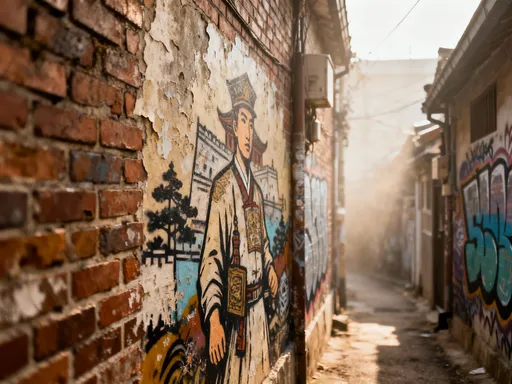
Step away from the modern skyline, and Accra reveals another dimension—one of history, decay, and creative renewal. James Town and Usshertown, among the city’s oldest neighborhoods, are living museums of architectural evolution. Here, colonial-era buildings with peeling pastel walls stand beside brightly painted murals celebrating Ghanaian heroes, musicians, and proverbs. Iron balconies sag under tropical humidity, while vibrant street art transforms cracked facades into galleries. The lighthouse at James Town, painted in bold red and white stripes, rises like a sentinel over the Atlantic, offering one of the city’s most iconic backdrops. This blend of old and new, neglect and reinvention, creates a visual tension that is endlessly compelling for photographers.
Walking through these neighborhoods feels like flipping through pages of a layered history book. Each building tells a story—of trade, migration, resistance, and resilience. Some walls bear graffiti that reads "We Rise," while others display intricate stencils of Adinkra symbols, each carrying philosophical meaning. The contrast between weathered surfaces and fresh paint adds depth and texture to images. A close-up of chipped blue paint next to a vivid mural of a dancing woman can convey both time and transformation. For wide shots, position yourself at street corners where converging lines draw the eye toward focal points like the lighthouse or a brightly dressed passerby.
For the best light, visit early in the morning or late afternoon. Midday sun can be harsh, creating strong contrasts that are difficult to manage. Early light softens the textures and brings out the subtleties of color. Consider a walking route that starts at the lighthouse, moves through the narrow streets of James Town, and ends near the fishing harbor, where boats are often being repaired or repainted. This path offers a range of subjects: architecture, people, and maritime activity. Always be mindful of privacy. While public spaces are fair game, avoid photographing inside homes or private courtyards without permission. Some residents may invite you in willingly, especially if you’ve taken time to introduce yourself. These moments often yield the most intimate and powerful images—not because they are dramatic, but because they are real.
Cultural Moments: Festivals, Dance, and Daily Rituals
Accra’s cultural calendar is rich with moments that pulse with energy and meaning. Among the most significant is the Homowo Festival, celebrated by the Ga people each August. The word "Homowo" means "hooting at hunger," commemorating a historical period of famine and survival. The festival unfolds with drumming, dancing, processions in traditional regalia, and the sprinkling of sacred cornmeal in homes and streets. For photographers, it is a rare opportunity to capture expressions of joy, pride, and spiritual connection. The vibrant kente cloths, elaborate headdresses, and synchronized movements of dancers create dynamic, emotionally charged scenes that are both visually stunning and culturally profound.
Other moments, less formal but equally meaningful, occur daily. In neighborhood squares, elders gather under mango trees to discuss community matters. At dusk, drumming circles form spontaneously, drawing in children and passersby. Women prepare banku and soup in outdoor kitchens, their hands moving with practiced ease. These rituals—some centuries old, others evolving in real time—are the quiet pulse of Accra’s identity. Photographing them requires more than a fast shutter speed; it demands presence. Arrive early, stay late, and let people become accustomed to your presence. Often, the best images come not from the peak of action, but from the quiet moments in between—the grandmother adjusting her grandchild’s cloth, the drummer wiping sweat from his brow, the girl watching the dance with wide, wondering eyes.
When photographing cultural events, prioritize participation over intrusion. Instead of circling the edges, find ways to engage—learn a few phrases, offer help, or simply sit and observe. Being invited into a space, even silently, changes the nature of the photograph. It shifts from observation to inclusion. This approach not only results in more authentic images but also honors the dignity of the subjects. Remember: a festival is not a performance for tourists. It is a lived experience, a thread in the fabric of community life. Capturing it with care means recognizing that you are a guest, not a director. Let the moment lead you, not the other way around.
Urban Greenery and Hidden Corners: The Calmer Side of Accra
Amid the energy of markets, streets, and festivals, Accra also offers spaces of stillness and reflection. These quieter corners provide a necessary counterbalance, allowing photographers to slow down and reconnect with the subtler rhythms of the city. The Aburi Botanical Gardens, located just a short drive north of Accra, is one such sanctuary. Established in 1890, it spans over 60 hectares of curated greenery, with winding paths, shaded benches, and bursts of tropical blooms. Towering palms, fragrant frangipani trees, and cascading ferns create a sense of peace that feels worlds away from the urban rush. Here, photography becomes contemplative—focused on light filtering through leaves, dew on petals, or the quiet interaction between visitors and nature.
Within the city itself, smaller oases await discovery. The grounds around Independence Square, though often associated with national events, can be serene in the early morning when joggers circle the monuments and birds call from the trees. Tree-lined streets in neighborhoods like Cantonments and Labone offer dappled light and a slower pace. A single baobab tree standing at a crossroads, a courtyard filled with potted plants, or a quiet churchyard with blooming hibiscus—these moments invite softer, more intimate compositions. They remind us that beauty is not always loud, and stories are not always told through movement.
Photographing in these spaces calls for a different approach. Use a shallow depth of field to isolate details—a butterfly on a leaf, a droplet on a spiderweb, the texture of bark. Embrace soft light and natural shadows to create mood. These images may not grab attention immediately, but they linger in the mind. They offer balance to the louder, busier shots of markets and streets. Including them in your portfolio creates a fuller, more nuanced portrait of Accra—one that acknowledges both its vibrancy and its quiet strength. These moments of calm are not escapes from the city; they are part of its soul.
Photography with Purpose: Telling Stories, Not Just Taking Shots
At its core, photography is an act of attention. In Accra, that attention must be given with care. Every photograph taken carries responsibility—not just to the image, but to the people and places within it. The goal is not to extract, but to honor. This means resisting the temptation to chase only the exotic or dramatic. It means recognizing that dignity exists in ordinary moments: a woman counting change, a boy repairing a bicycle, a man reading a newspaper under a tree. These are not background elements; they are the heart of the story.
Telling stories with purpose begins with intention. Ask yourself: Why am I taking this photo? Who benefits from it? Could this image misrepresent or reduce its subject? These questions help guard against voyeurism and promote ethical practice. When possible, share your photos with the people in them. A printed copy, a digital file shown on a phone—these small gestures build bridges. They transform photography from a one-sided act into a shared experience. Some of the most meaningful exchanges I’ve had in Accra began with a simple question: "Would you like to see the photo?" More often than not, the answer is yes, followed by a smile, a story, or an invitation to sit and talk.
In a world saturated with images, authenticity stands out. Filters may smooth skin, but they cannot replicate the warmth of a genuine laugh. Hashtags may increase visibility, but they cannot replace the weight of a shared moment. Accra teaches photographers to see deeply, to listen with their eyes, and to frame with humility. The city does not perform for the lens; it lives. And when we approach it with respect, curiosity, and patience, our photographs become more than souvenirs—they become testaments. Testaments to light, to soul, to the quiet truth that every frame, when taken with care, can tell a story that matters.