You Won’t Believe What I Found Walking Through Addis Ababa’s Markets
Walking through Addis Ababa changed how I see travel. Instead of rushing between landmarks, I let my feet guide me through bustling streets and hidden alleys. What I discovered? A city alive with rhythm, color, and commerce at every turn. From open-air markets to quiet craft corners, shopping here isn’t just about buying—it’s about connecting. If you think shopping is all malls and price tags, wait until you experience it on foot in Ethiopia’s vibrant capital. This is retail with soul.
Why Walk to Shop? The Addis Ababa Advantage
There is a quiet magic in moving through a city at human speed. In Addis Ababa, walking is not merely a mode of transportation—it’s the key to unlocking its true character. While many travelers rely on taxis or ride-shares to dart between tourist sites, those who choose to walk discover a deeper, richer version of the city. The pace allows space for observation, interaction, and surprise. You notice the steam rising from a morning coffee cart, the flash of hand-dyed cotton in a doorway, or the sudden burst of laughter from a group of women haggling over spices. These are moments missed when viewed through a car window.
Walking aligns you with the natural rhythm of Addis Ababa. The city was not built for speed. Its winding streets, uneven sidewalks, and spontaneous street vendors create an organic layout that rewards patience and curiosity. Unlike rigid urban grids designed for vehicles, Addis unfolds in layers, each alley revealing something new. By foot, you gain access to places cars cannot go—narrow passageways behind churches, tucked-away workshops where artisans shape leather by hand, or open courtyards where farmers from the highlands sell their harvests directly to the public.
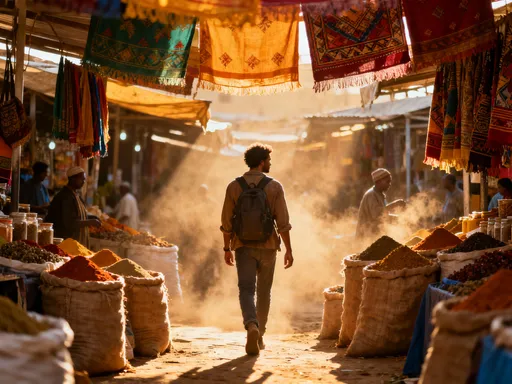
The sensory experience of walking through Addis Ababa’s commercial districts is unmatched. The air carries the warm scent of berbere spice, the earthy aroma of raw coffee beans, and the occasional tang of fresh leather. Sounds blend in a constant hum—vendors calling out prices, the clink of metal crafts being polished, the low murmur of Amharic conversations flowing like a river. Colors explode in every direction: handwoven shawls in deep reds and golds, baskets dyed with natural pigments, and piles of turmeric and cumin glowing like sunsets. This is not a curated museum display; it is life in motion.
More than aesthetics, walking fosters genuine connection. When you move slowly, people notice you. Shopkeepers offer a nod, children wave, and elders sitting on benches smile as you pass. These small gestures build a sense of belonging, even if only for a day. You are no longer an observer but a participant. And in a place where community is central to daily life, that shift in perspective transforms shopping from a transaction into a shared experience. It’s this authenticity—unscripted, unfiltered, alive—that makes walking the most rewarding way to explore Addis Ababa’s markets.
Mercato: The Heartbeat of Urban Commerce
No journey through Addis Ababa’s shopping landscape is complete without stepping into Mercato, the largest open-air market in Africa. Spanning several square kilometers in the heart of the city, Mercato is not just a marketplace—it is an ecosystem. Here, thousands of vendors operate in tightly packed zones, each dedicated to a specific type of good. One alley overflows with bolts of handwoven cotton, another with hand-carved wooden stools, while a third hums with the energy of electronics traders testing radios and chargers. The scale is overwhelming at first, but with time and attention, its logic reveals itself.
Mercato is not designed for tourists. It exists primarily to serve the daily needs of Addis Ababa’s residents. Farmers from the surrounding countryside arrive before dawn, unloading sacks of grain, bundles of injera flour, and crates of fresh vegetables. Tailors sit at sewing machines under faded awnings, stitching custom garments for local customers. Hardware vendors sell everything from nails to cookware, while secondhand clothing stalls offer affordable options for families on tight budgets. This is commerce rooted in necessity, tradition, and resilience. The fact that visitors are welcome here is a gift, not the purpose.
For the walking traveler, Mercato offers an unparalleled opportunity to witness authentic urban life. The energy is electric, the pace relentless, and the sights unforgettable. Stalls are stacked floor to ceiling with goods, organized in ways that seem chaotic but follow an internal order known to regulars. Prices are rarely marked, and bargaining is expected—a dance of polite negotiation that requires patience and a smile. A simple “How much?” in Amharic ("Enew yemete?") can open the door to conversation, often leading to stories about a vendor’s family, their hometown, or the origin of a particular craft.
To navigate Mercato wisely, timing matters. Early mornings, between 7:00 and 9:30 a.m., offer the best experience. The air is cooler, the light is soft, and the market is in full swing without being overcrowded. By midday, temperatures rise, and the crowds thicken, making movement more difficult. Visitors should wear comfortable shoes, carry only essential items, and keep valuables secure. While Mercato is generally safe, it is wise to stay aware of surroundings, especially in densely packed areas.
One of the joys of Mercato is discovering items you didn’t know you needed. Handwoven baskets with intricate geometric patterns, traditional coffee pots (jebenas) made of clay or metal, or bundles of raw spices tied in paper—each purchase carries a story. The key is to look beyond the obvious souvenirs. Avoid mass-produced trinkets that mimic Ethiopian designs but lack authenticity. Instead, seek out goods made locally, sold by artisans who take pride in their work. These are the treasures that will carry the spirit of Addis Ababa home with you.
From Sidewalk Stalls to Artisan Corners: Hidden Gems on Foot
Beyond the vastness of Mercato lie quieter, more intimate shopping experiences—places only reachable by foot and often overlooked by guidebooks. These hidden corners reveal a different side of Addis Ababa, one shaped by craftsmanship, tradition, and quiet dignity. In the Piazza district, for example, narrow alleys open into small courtyards where elderly artisans carve wooden crosses with delicate precision. These crosses, often made from olive wood or ebony, are not just religious symbols but works of art, passed down through generations.
Not far from Holy Trinity Cathedral, a row of sidewalk stalls displays hand-beaded jewelry in bold colors and geometric designs. The beads are often made from recycled glass or locally sourced clay, strung together in patterns that reflect Ethiopia’s diverse cultural heritage. Vendors here are usually women who craft the pieces themselves, working in the shade of an umbrella or a tree. They welcome questions and are happy to explain the meanings behind certain designs—some represent protection, others fertility or prosperity. Buying from them is not just a purchase; it’s a small act of support for local livelihoods.
On weekends, pop-up markets appear in various neighborhoods, often near churches or community centers. These temporary markets feature small-scale producers selling organic honey, hand-ground spices, or freshly roasted coffee beans. The coffee is particularly special—grown in Ethiopia’s highlands, roasted over open flames, and sold in small paper bags tied with twine. These are not commercial blends but personal batches, each with its own flavor profile. Speaking with the producers, you learn about the regions they come from—Sidamo, Yirgacheffe, Harar—and the pride they take in their craft.
Walking allows you to stumble upon these moments by chance. You might turn a corner and find a man polishing leather sandals using techniques unchanged for decades. Or you might hear the rhythmic tapping of a silversmith shaping a pendant in a dimly lit workshop. These encounters are fleeting but powerful. They remind you that behind every object is a human hand, a story, a lifetime of skill. Unlike tourist shops where everything is priced and packaged, these vendors offer something rarer: authenticity. Their goods are not made for export but for use, for celebration, for daily life. And when you carry one home, you carry that truth with it.
The Rhythm of Local Life: How Walking Syncs You with the City
One of the most profound effects of walking through Addis Ababa is the way it synchronizes you with the city’s natural rhythm. In many global cities, tourism operates on a separate timeline—fast, scheduled, and isolated from local routines. But in Addis, walking dissolves that boundary. You begin to move at the same pace as residents, to notice what they notice, to value what they value. You wake early because the market opens at sunrise. You rest during the midday heat. You return in the late afternoon, when the light softens and the streets come alive again.
This rhythm is shaped by generations of tradition. Every morning, women in white cotton dresses (netelas) walk to their local markets, baskets in hand, to buy vegetables, spices, and bread for their families. Farmers arrive from nearby towns, their trucks piled high with produce. Butchers hang fresh meat in shaded stalls, while coffee vendors brew small cups over charcoal stoves. These routines are not performances for visitors; they are the fabric of everyday life. When you walk through these scenes, you are not watching a show—you are stepping into the flow.
Over time, familiar faces emerge. A spice seller who remembers your preference for mitmita. A tailor who waves as you pass his sewing machine. A grandmother who sells roasted chickpeas from a wooden cart. These small connections build trust and warmth. They transform a marketplace from a place of commerce into a community space. And they remind you that shopping, at its best, is not transactional but relational. It is about seeing and being seen, about mutual respect and shared humanity.
Walking also reveals the flow of goods across Ethiopia. The coffee you buy in Addis may have come from a small farm in the south, carried by truck or mule. The cotton in a handwoven shawl might have been grown in the Rift Valley, spun by hand, and dyed with natural pigments. The leather sandals were likely made from locally sourced hides, shaped using methods passed down for centuries. By moving slowly, you begin to trace these threads, to understand how rural and urban life are woven together. This awareness deepens your appreciation for what you buy and the people who made it.
What to Buy—and What to Skip
With so much to see and choose from, it helps to know what is truly worth taking home. Authentic Ethiopian goods are not just souvenirs—they are pieces of culture, history, and craftsmanship. Among the most meaningful purchases are handwoven cotton shawls, known as netelas. Traditionally worn by women during religious ceremonies and special occasions, these shawls feature delicate white fabric with colorful embroidered borders. Each region has its own style, and some families pass them down as heirlooms. Buying one supports local weavers and preserves a textile tradition at risk of fading.
Hand-beaded jewelry is another excellent choice. Look for pieces made with natural materials and traditional designs. Avoid plastic imitations or items stamped with fake tribal motifs. Genuine beads often have slight imperfections—proof of handmade work. Similarly, leather goods like sandals, bags, or belts made in Addis Ababa are known for their durability and craftsmanship. Ethiopian leather is tanned using age-old methods, resulting in a soft, rich texture that improves with age.
No visit would be complete without coffee. Ethiopia is the birthplace of coffee, and buying beans directly from local roasters ensures freshness and authenticity. Look for small-batch roasts labeled with their region of origin—Sidamo for floral notes, Yirgacheffe for citrus brightness, Harar for fruity depth. Purchase whole beans and grind them at home for the best flavor. Alongside coffee, consider buying whole spices like berbere (a complex blend of chili, garlic, and fenugreek) or korarima (Ethiopian cardamom), which add depth to home cooking.
When shopping, be mindful of what to avoid. Mass-produced items labeled as “Ethiopian” but made overseas are common in tourist areas. These include wooden masks with exaggerated features, plastic replicas of traditional tools, or clothing printed with generic African patterns. They lack cultural accuracy and do little to support local artisans. Instead, focus on items with provenance—those you can trace back to a person, a place, or a process. A simple way to verify authenticity is to ask the vendor where the item was made and by whom. Most genuine artisans are proud to share this information.
Learning a few Amharic phrases can also enhance your shopping experience. "Enjera yemete?" (How much is this?) shows respect and opens dialogue. "Tsebel ena?" (Can you lower the price?) is a gentle way to begin bargaining. And "amasegenalehu" (thank you) goes a long way in building goodwill. Bargaining is expected, but it should be fair and friendly, not aggressive. A smile, patience, and mutual respect make the exchange enjoyable for both parties.
Practical Tips for the Walking Shopper
To make the most of your shopping walks in Addis Ababa, preparation is key. Comfortable footwear is essential—sidewalks can be uneven, and you may walk for hours. Lightweight, breathable clothing helps manage the city’s warm days, especially between 11 a.m. and 3 p.m., when the sun is strongest. Carry a reusable water bottle to stay hydrated, and consider a small backpack to hold purchases and essentials.
Bring small denominations of Ethiopian birr. Many vendors, especially in markets, do not accept credit cards and may not have change for large bills. Having coins and smaller notes (10, 50, or 100 birr) makes transactions smoother. Keep your money secure—use a crossbody bag or a money belt under your clothing. While Addis Ababa is generally welcoming, crowded markets require basic safety awareness, just as in any major city.
Plan your walks around the weather and local rhythms. Early mornings and late afternoons are ideal for walking, offering cooler temperatures and softer light. Midday is better spent resting, visiting shaded museums, or enjoying a meal indoors. Combine your shopping with nearby cultural sites to enrich the experience. The Ethnological Museum at Addis Ababa University offers insight into Ethiopia’s diverse cultures, while St. George Cathedral’s museum displays religious art and historical artifacts. These visits deepen your understanding of the items you see in the markets.
Don’t rush. Allow time for pauses—a cup of spiced tea from a street vendor, a conversation with a craftsman, a moment to watch a tailor at work. These interludes are not delays; they are part of the journey. Let curiosity guide you. Turn down an alley that looks interesting. Ask a vendor about their craft. Accept an invitation to see where something is made. The most memorable experiences often come from unplanned moments.
Beyond the Purchase: Why These Walks Stay With You
In the end, what lingers is not what you bought, but how you felt. The memory of a woman laughing as she adjusted her netela. The smell of roasting coffee beans on a quiet street corner. The weight of a hand-carved wooden spoon in your hand. These are the impressions that remain long after the trip ends. Shopping in Addis Ababa, when done on foot, becomes more than a list of items—it becomes a collection of human moments.
This kind of travel shifts your focus from consumption to connection. It invites you to slow down, to pay attention, to engage. You begin to see shopping not as a means to an end, but as a window into a culture’s values, creativity, and resilience. The objects you bring home are not just decorations; they are reminders of conversations, kindness, and shared smiles. They carry the spirit of a city that welcomes you not as a customer, but as a guest.
Addis Ababa is not a destination to be checked off a list. It is a living, breathing marketplace where every step tells a story. The streets are not just pathways—they are threads in a larger tapestry of life. And when you walk through them with openness and respect, you become part of that story. So leave the maps behind. Step off the tourist trail. Let your feet guide you. You never know what you might find—not just in the markets, but within yourself.