Taste of Al Wakrah: How to Eat Like a Local Without Getting Lost in the Flavors
Stepping into Al Wakrah, Qatar, is like opening a spice cabinet filled with saffron, cardamom, and stories. This coastal gem blends tradition and taste in ways that surprise even seasoned travelers. I didn’t expect to fall in love with a city through its food — but here, every meal feels like an invitation. From seaside shawarma stands to quiet family-run madhabs, the real magic isn’t just in what you eat, but how you eat it. Let me show you how to savor it all — like a true local.
First Bites: What Makes Al Wakrah’s Food Scene Unique
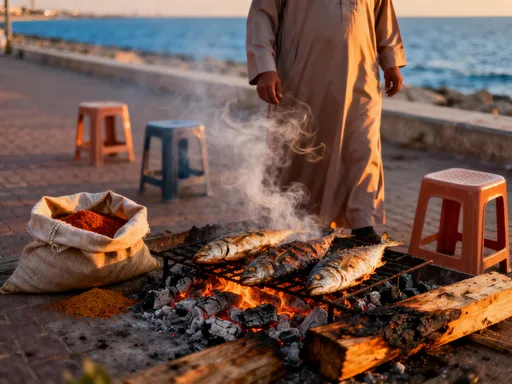
Al Wakrah’s culinary identity is shaped by its geography, history, and deep-rooted values of hospitality. Nestled along the southern coast of Qatar, the city has long relied on the Arabian Gulf for sustenance, with fishing traditions passed down through generations. The scent of grilled fish on charcoal, the sound of waves near waterfront eateries, and the sight of dhows returning at dawn with their daily catch — these are not curated experiences for tourists, but everyday rhythms of life. This authenticity defines Al Wakrah’s food culture: it’s unpretentious, deeply communal, and rooted in simplicity.
While Doha dazzles with high-end dining, Al Wakrah offers a more grounded experience. Here, food isn’t performance — it’s purpose. Meals are often shared from a single platter, eaten with the right hand, and accompanied by slow conversation. The influence of Persian, Indian, and Levantine flavors is evident, yet distinctly Qatari in execution. Dishes like machboos — spiced rice with meat or fish — reflect centuries of trade and cultural exchange, yet remain humble in presentation. What sets Al Wakrah apart is not extravagance, but continuity: recipes unchanged for decades, served in places with no signage, where loyalty is earned through consistency.
The city’s recent development has brought modern cafes and international chains, yet the heart of its food scene remains in unassuming corners. A vendor frying samboosas at sunrise, a grandmother stirring lentil soup in a clay pot, or a fishmonger grilling hamour over open flame — these moments are not staged. They are lived. To eat like a local means stepping away from polished menus and embracing spontaneity. It means understanding that the best meal might come from a plastic stool by the Corniche, not a five-star hotel. The real flavor of Al Wakrah lies not in novelty, but in tradition quietly preserved.
Timing Is Everything: When to Eat for the Best Experience
In Al Wakrah, when you eat matters as much as what you eat. The rhythm of daily life follows a different tempo than in Western cities or even neighboring tourist hubs. Breakfast, for instance, begins early — often before 7 a.m. — when local bakeries pull fresh batches of khubz (flatbread) from stone ovens. These small, family-run spots are busiest in the first two hours of the day, and by mid-morning, many close until evening. Arriving late means missing not just the food, but the atmosphere: men sipping karak tea while discussing the day’s news, children grabbing a quick bite before school, and the warm scent of cardamom lingering in the air.
Lunch, traditionally the largest meal, peaks between 1:00 and 2:30 p.m. This is when families gather, and many smaller restaurants serve their freshest dishes. Seafood, in particular, is best ordered during this window, as it was likely caught that morning. By 4 p.m., activity slows, and some eateries shut down for a few hours, re-opening in the evening. Dinner starts later, often after 8 p.m., and can extend well past 10 p.m., especially on weekends. Late-night dining isn’t about nightlife — it’s about family, conversation, and the unhurried pace of Qatari social life.
Aligning your meal schedule with local habits offers more than just fresher food — it fosters connection. Staff at family-run spots are more relaxed and talkative during off-peak hours, and you’re more likely to be offered tea or a sample of a new dish. Conversely, arriving at a crowded restaurant during peak time may mean rushed service and less willingness to accommodate requests. By adjusting your timing, you signal respect for local customs, which often opens doors to deeper experiences. For example, showing up at a small madhab just before closing might lead to an invitation to join the owner’s family for tea — a gesture born from shared timing, not transaction.
To avoid tourist traps, resist the urge to eat on a fixed schedule. Many visitors stick to early lunches or quick dinners, leading them to the same few English-menu spots. By embracing local timing, you naturally gravitate toward places where residents eat — where prices are fairer, portions are generous, and the food is made for Qatari palates, not foreign expectations. The secret isn’t in the dish, but in the clock.
Off the Radar: Finding Hidden Eateries Without a Guidebook
Some of the best meals in Al Wakrah aren’t listed on any app or review site. They exist in plain sight — a doorway with no sign, a counter behind a grocery store, or a cluster of plastic tables near a mosque. Finding them requires observation, patience, and a willingness to trust local cues. One of the most reliable indicators is foot traffic. If you see a steady stream of men in thobes (traditional robes) or women in abayas stopping at a particular spot, especially during meal times, it’s likely a trusted local favorite. These aren’t places chasing visibility — they thrive on word-of-mouth and consistency.
Another clue is delivery activity. Watch for motorbikes with insulated bags arriving at certain shops. Delivery drivers know where the good food is — and they won’t waste time on underperforming kitchens. If you see multiple drivers picking up from the same unmarked door, it’s worth investigating. Similarly, asking a shopkeeper or pharmacist for a recommendation can yield surprising results. These professionals interact with the community daily and often have personal favorites they’re happy to share — especially if you approach with genuine curiosity and a smile.
When approaching an unknown spot, respect is key. Enter slowly, observe how others behave, and follow their lead. If people are sitting on the floor, do the same. If they’re ordering at a counter, avoid waiting for a server. Non-verbal cues matter — nodding, pointing, or mimicking gestures can bridge language gaps. Don’t expect a menu in English; instead, look at what others are eating or point to dishes on display. Many of these places operate on trust and routine, so hesitation or loud questions can create distance. A simple “salaam alaikum” (peace be upon you) goes a long way in building rapport.
Success in finding hidden gems isn’t about checklist tourism — it’s about presence. It’s noticing the old man who stops at the same corner every morning for a cup of laban, or the group of fishermen sharing a platter by the harbor. These routines are maps in themselves. One traveler, for instance, followed a delivery driver on foot and ended up at a family-run spot serving handmade fatayer (savory pastries) stuffed with spinach and pine nuts — a dish rarely seen in tourist areas. No signage, no social media, just decades of quiet excellence. The reward isn’t just the meal, but the feeling of having been let in on a secret.
Seafood Done Right: Why the Corniche Holds the Freshest Catches
The Al Wakrah Corniche isn’t just a scenic walkway — it’s a living marketplace of the sea. Along its stretch, small fishing boats return daily with their catch, and nearby grills fire up as soon as the fish are sorted. This proximity to the source is what makes the seafood here exceptional. Unlike imported or frozen options found in many urban restaurants, the fish in Al Wakrah is often less than a few hours out of the water. The most prized species, such as zubaidi (also known as hamour or grouper), are grilled simply — with only lemon, salt, and a touch of garlic — allowing the natural sweetness of the flesh to shine.
To identify the freshest seafood, rely on sensory cues. Fresh fish should have a clean, briny smell — never fishy or sour. The eyes should be clear, not cloudy, and the skin should glisten with moisture. In open-air grills along the Corniche, watch how the fish is prepared. The best vendors clean and scale the fish on-site, then cook it over charcoal, which imparts a smoky depth without overpowering the flavor. You’ll often see whole fish, head and tail intact, served on a bed of rice or with a side of daqoos (a tangy tomato and cucumber salad). This isn’t presentation for show — it’s a sign that the fish is truly fresh and trusted enough to be served without concealment.
Zubaidi remains a local favorite, prized for its firm texture and mild taste. It’s often served as machboos al samak — spiced rice with fish — where the broth from the cooked fish infuses the rice with oceanic richness. Another popular preparation is grilled hamour with a side of hawayij, a Qatari spice blend that includes cumin, coriander, and black lime. These dishes are rarely found in high-end restaurants, not because they’re inferior, but because they’re too simple, too humble — and too deeply tied to home cooking.
Visitors often miss these experiences by heading straight to air-conditioned seafood restaurants with laminated menus. While these places are clean and convenient, they lack the immediacy of the Corniche grills. Eating by the water, with the breeze carrying the scent of the sea and the sound of waves underfoot, transforms a meal into a moment. It’s not just about taste — it’s about context. The fish tastes better because you saw it caught, because you watched it grilled, because you’re sitting where locals have eaten for generations.
Beyond the Plate: Understanding Etiquette to Eat Like One of Them
In Al Wakrah, dining is as much about behavior as it is about flavor. Small gestures — how you sit, how you eat, how you respond to hospitality — can shape the entire experience. The most fundamental rule is to use your right hand for eating, especially when sharing from a common dish. The left hand is traditionally considered unclean, so using it to take food can be seen as disrespectful, even if unintentional. This isn’t about strict rules — it’s about showing awareness of cultural norms.
Another key custom is accepting tea when offered. Karak tea — sweet, milky, and spiced with cardamom — is more than a drink; it’s a symbol of welcome. Refusing it outright can be interpreted as rejecting hospitality. Even if you don’t drink it, accepting the cup and taking a small sip is a gesture of respect. Similarly, wait for the eldest person at the table to begin eating before you start. This practice reflects the high value placed on elders and family hierarchy. Jumping in first, even out of hunger, can seem impolite.
Sharing food is central to Qatari dining. Dishes are often served on large platters, meant to be eaten communally. Scooping rice or meat with the right hand — using the thumb and first two fingers — is the traditional method. While utensils are increasingly common, especially in mixed settings, eating by hand in a family home or local madhab shows willingness to engage. It also enhances the sensory experience — feeling the warmth of the rice, the texture of the meat, the blend of spices.
These customs aren’t performative — they build trust. When locals see a visitor making an effort, they often respond with greater warmth. It’s not unusual for a traveler who follows these small rules to be invited to join a family meal, offered a second serving, or given a recipe to take home. Hospitality in Al Wakrah isn’t transactional; it’s relational. By honoring the etiquette, you’re not just eating like a local — you’re being treated like one.
Flavor Hacks: How to Customize Dishes Without Offending
While Al Wakrah’s food is flavorful, it may not always match individual taste preferences — especially for those unaccustomed to spiciness or strong spices. The good news is that most dishes can be adjusted, but the way you ask matters. A direct command like “No spice” or “Less salt” can come across as critical. Instead, frame your request as a personal preference. Phrases like “I’m not used to strong flavors” or “Could I have a little less chili, please?” show respect while making your needs clear.
Learning a few basic Arabic words can also help. Saying “mumtaz” (excellent) or “la yasil” (not too hot) with a smile can go a long way. Even pointing to your mouth and making a gentle waving motion can communicate mildness without words. The key is to avoid visible hesitation — pushing food away, making a face, or asking for multiple changes can be seen as ungrateful, especially in family-run places where pride in the food runs deep.
Many dishes are already customizable by design. For example, machboos is often served with a side of daqoos or a bowl of yogurt, which can balance the heat. If you find a dish too spicy, reach for these accompaniments rather than demanding changes. Similarly, rice dishes can be adjusted by adding more or less sauce — a subtle way to control flavor without making a scene.
When in doubt, observe others. If everyone around you is eating a dish without issue, it’s likely meant to be enjoyed as-is. But if you see people adding lemon or yogurt, feel free to follow. The goal isn’t to alter the dish completely, but to find a balance that respects both your palate and the cook’s intention. By communicating politely and adapting thoughtfully, you show appreciation — which often leads to better service and even personalized recommendations.
From Meal to Memory: Turning Bites into Lasting Moments
A meal in Al Wakrah can be more than nourishment — it can be a story, a connection, a moment of stillness in a fast-moving world. The most memorable experiences often happen when we put the camera down and simply be present. Sitting on a low stool by the sea, eating grilled fish with your hands, listening to the murmur of Arabic conversation — these are the moments that stay with you long after the flavors fade.
Mindful eating — paying attention to taste, texture, smell, and setting — deepens the experience. Instead of rushing through a meal to check it off a list, take time to savor each bite. Notice the smokiness of the grill, the warmth of the rice, the sweetness of the tea. These details are part of the culture. Gratitude, too, plays a role. A simple “shukran” (thank you) to the cook, a nod to the elder at the next table, a smile to the child watching you eat — these small acts create invisible threads of connection.
Some of the most powerful travel memories come from unplanned moments: sharing a meal with a fisherman who invites you to his table, learning to roll dough from a grandmother in her kitchen, or being handed a cup of tea by a stranger who sees you sitting alone. These aren’t staged encounters — they’re gifts born from mutual respect and presence. When you eat like a local, you’re not just consuming food — you’re participating in a way of life.
And that participation leaves a mark. It changes how you see the place, and how you see yourself within it. You begin to understand that travel isn’t about collecting destinations, but about collecting moments of human connection. A single meal, eaten with awareness and appreciation, can become a doorway to belonging — even if only for an hour.
Final Thoughts: Eating with Purpose in a Changing City
Al Wakrah is evolving. New buildings rise along the Corniche, international brands open storefronts, and younger generations embrace global trends. Yet, amid this change, the heart of the city’s food culture remains — in the early-morning bakeries, the family-run madhabs, the fishermen hauling in their nets. The challenge for travelers is not just to find these experiences, but to honor them.
Authentic dining in Al Wakrah isn’t about luxury or exclusivity — it’s about humility and respect. It’s about showing up at the right time, listening more than speaking, and understanding that a meal is a bridge between people. As tourism grows, the risk of commodification increases — of turning culture into performance, hospitality into transaction. But when travelers approach food with purpose, with curiosity, and with gratitude, they help preserve what makes Al Wakrah special.
The habits learned here — observing local rhythms, respecting customs, seeking connection over convenience — can transform not just how we eat, but how we travel. They remind us that the best experiences aren’t found in guidebooks, but in the quiet moments between strangers who become, for a meal, like family. So the next time you sit down to eat in Al Wakrah, don’t just taste the food. Taste the tradition, the trust, the time. Eat not as a guest, but as a participant — and let the flavors carry you deeper into the soul of the city.