You Won’t Believe What These Desert Walls Hold – A Road-Trip Revelation
Driving through the Moroccan desert, I never expected ancient mud walls to move me so deeply. In Ouarzazate, every sunlit fortress and quiet alley tells a story carved in clay. More than just stone and earth, these structures breathe history, resilience, and artistry. This isn’t just architecture—it’s a language of survival and beauty. What I discovered on the open road changed how I see both landscapes and legacy. The journey into southern Morocco revealed not only a region shaped by time and terrain but a culture that has mastered the quiet wisdom of building with the earth, not against it. This is a place where walls speak, shadows cool the spirit, and the past lives in every hand-shaped brick.
The Journey Begins: Why Ouarzazate Called
The decision to drive into southern Morocco was born from curiosity—and a craving for authenticity. Unlike guided tours, a self-driven route offers freedom to pause, explore, and connect at your own rhythm. Ouarzazate stood out not only as a gateway to the Sahara but as a hub where film legends and Berber traditions intersect. Its location—nestled between the rugged High Atlas Mountains and the sweeping plains of the Draa Valley—makes it a natural crossroads for travelers seeking both adventure and meaning. But what truly lured me was the promise of seeing architecture that blends seamlessly with the land, shaped by centuries of sun, wind, and human ingenuity.
This part of Morocco has long been a corridor for caravans, traders, and nomadic tribes. The region’s history is written not in textbooks alone but in the very fabric of its buildings. Ouarzazate, often called the “Hollywood of Africa,” draws filmmakers for its dramatic landscapes and timeless aesthetic. Yet beyond the film sets and tourist trails lies a deeper truth: this is a place where tradition and environment have forged a unique architectural language. The city’s quiet streets, framed by earthen towers and shaded courtyards, invite contemplation. Here, beauty is not ornamental—it is functional, necessary, and deeply rooted in survival.
Traveling here is not about ticking off landmarks. It is about immersion. The slower pace, the warmth of local hospitality, and the ever-present glow of sun on clay walls create a rhythm that recalibrates the soul. Whether you come for the history, the scenery, or the silence, Ouarzazate offers something rare in the modern world: a sense of continuity. It reminds us that human life, when aligned with nature, can be both enduring and elegant.
Wheels on the Road: Navigating Morocco’s Southern Route
Starting from Marrakech, the drive to Ouarzazate unfolds like a slow reveal. The Atlas Mountains rise dramatically, their peaks dusted with snow even as the valleys below shimmer with heat. The transition is striking—from the bustling medina of Marrakech, with its vibrant souks and call to prayer echoing through narrow alleys, to the open skies and quiet roads of the south. The journey covers about 200 kilometers, but time slows as the landscape commands attention. Each bend in the road offers a new vista: terraced fields carved into steep hillsides, Berber villages clinging to rocky outcrops, and the occasional camel caravan moving like shadows across the horizon.
Road conditions vary, requiring both caution and adaptability. Well-paved highways give way to winding mountain passes, such as the Tizi n'Tichka, which climbs to over 2,200 meters. These stretches demand focus, with sharp turns and occasional fog, but the views are worth every kilometer. Beyond the pass, the terrain flattens into arid plains, where the horizon stretches endlessly and the air grows drier. Renting a 4x4 with basic navigation tools proved essential, not for luxury, but for reliability. While GPS can guide you, local knowledge often proves more valuable—especially when a dirt track leads to an unexpected ksar or a hidden spring.
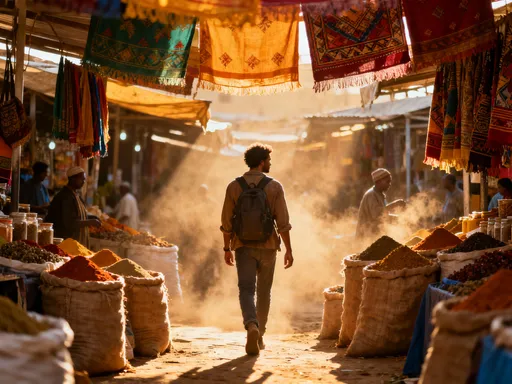
Along the way, roadside stalls offer mint tea and flatbread, served with a smile by families who have lived in the region for generations. Local drivers wave with genuine warmth, a gesture that speaks volumes about the culture of hospitality. This journey wasn’t just about reaching a destination; it was about reading the landscape, one kilometer at a time. The road itself became a teacher, revealing how people adapt to elevation, climate, and isolation. And with every passing village, the architecture grew more distinct—more earth-toned, more grounded, more in tune with the elements.
First Glimpse: The City of Doors and Dust
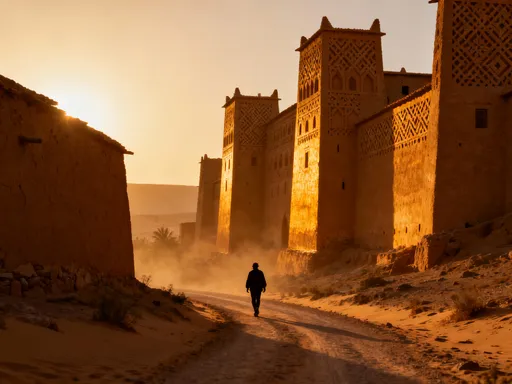
Locals call Ouarzazate “the door to the desert,” and that title makes sense the moment you arrive. The skyline is dotted with kasbahs—fortified homes made of rammed earth and straw. Their thick walls glow amber at sunrise, shifting to deep rust by sunset. Unlike modern buildings, these structures don’t fight the climate—they work with it. Cool inside even at midday, they’re masterclasses in passive climate control. The city’s layout, shaped over centuries, follows the contours of the land, with narrow alleys that twist to block wind and sand, and shaded courtyards that capture what little breeze exists.
Walking through the old quarters—or parking nearby and exploring on foot—reveals a world built for endurance. The buildings are not static relics; they are maintained, repaired, and sometimes repurposed. Rooftops, flat and accessible, double as nighttime sleeping spaces under the stars, a tradition born from the need to escape the day’s heat. Doors, often carved from thuya wood, are both functional and symbolic—gateways that protect privacy while inviting trusted guests. Even the placement of windows is deliberate, designed to limit direct sunlight while allowing soft, diffused light to enter.
What struck me most was the silence. In a world saturated with noise, Ouarzazate offers stillness. The absence of honking, the lack of billboards, the slow pace of life—all contribute to a sense of calm. Children play near fountains, elders sip tea in shaded corners, and the rhythm of daily life feels unhurried. This is not a city chasing modernity; it is one that has found balance. The dust on the streets is not a sign of neglect, but of continuity—a reminder that this place has been lived in, not just visited.
Kasbahs That Speak: A Closer Look at Earthen Architecture
The most striking feature of Ouarzazate’s buildings is their material: pisé, or rammed earth. Mixed with straw and colored by local minerals, this blend creates walls that are strong, insulating, and surprisingly beautiful. The process is both simple and sophisticated. Layers of earth are compacted between wooden forms, then left to dry under the sun. Over time, the walls develop a texture that resembles stone, yet they remain breathable and temperature-regulating. This method has been used for thousands of years across North Africa and the Middle East, and in Ouarzazate, it reaches a level of artistry that is both functional and poetic.
The craftsmanship lies in the details. Geometric patterns along cornices are not merely decorative—they reflect Berber symbolism and ancestral storytelling. Wooden beams protrude from the walls like teeth; these are called toron, and they serve multiple purposes. They act as permanent scaffolding, allowing workers to climb and repair the upper levels without additional structures. They also help bind the walls together, reducing cracking during seasonal shifts. The beams, typically made from palm or cedar, are embedded deep into the walls, creating a skeletal framework that strengthens the entire structure.
Doors are another marvel. Carved by hand from thuya wood—a rare, fragrant timber—they often feature intricate motifs: interlocking lines, stars, and symbols of protection. These doors are not just entries; they are statements of identity and heritage. Many are reinforced with iron bands, a nod to their original function as defensive structures. UNESCO recognizes several sites in the region, including the famous Aït Benhaddou, not only for their aesthetic value but for their sustainable design—centuries ahead of its time in terms of energy efficiency and environmental harmony.
From Film Sets to Living History: Where Hollywood Meets Heritage
Ouarzazate isn’t frozen in the past—it’s alive with reinvention. The Atlas Film Studios, established in the 1980s, have hosted productions from Gladiator to Game of Thrones, drawing global attention. Movie sets rise and fall in the desert, temporary cities built for the camera’s eye. But beyond the spectacle, something deeper persists: traditional building methods are still taught and used. Some families maintain ancestral kasbahs, passing down techniques from parent to child. Others adapt old forms into guesthouses, cultural centers, and artisan workshops, ensuring that the knowledge survives.
This blend of preservation and innovation keeps the architectural spirit vibrant. You can tour a 10th-century fortress and then see artisans shaping new walls using the same techniques. The film industry, while commercial, has also helped fund restoration projects. International interest has brought resources and awareness, allowing communities to protect their heritage while benefiting economically. It’s a delicate balance—between authenticity and adaptation, tradition and tourism—but in Ouarzazate, it is managed with care.
Local guides often share stories that bridge past and present. One elder explained how his grandfather taught him to read the cracks in a wall—each pattern indicating the type of stress it had endured. Another artisan demonstrated how straw is mixed into the mud to prevent shrinkage. These are not museum demonstrations; they are living practices. The film sets may be temporary, but the skills are enduring. In this way, Ouarzazate becomes more than a backdrop—it becomes a teacher, showing how culture can evolve without losing its soul.
Hidden Corners: Off-the-Beaten-Path Structures Beyond the Main Sites
While Aït Benhaddou draws crowds, quieter gems await just minutes off the main roads. Driving south toward Zagora, I stumbled upon smaller ksour—walled villages with communal granaries and shared courtyards. These sites feel untouched, their walls bearing cracks like wrinkles, each telling a story of time and endurance. Unlike the restored fortresses, these villages are still inhabited, their residents living much as their ancestors did. Women carry water from shared wells, children climb crumbling walls like playgrounds, and elders sit in doorways, watching the world pass by.
One local invited me in for tea, pointing out how the thick walls stay cool and how rainwater is channeled through ancient drainage paths. The home had no electricity, yet it was comfortable—shaded, ventilated, and perfectly adapted to its environment. The roof, made of palm beams and packed earth, was strong enough to walk on and light enough to insulate. In the courtyard, a small garden grew herbs and vegetables, irrigated by a drip system fed from stored rainwater. This was sustainability in practice, not theory.
These moments reminded me that architecture here isn’t just seen—it’s lived. Every design choice serves a purpose. Narrow entrances control airflow. High windows allow heat to escape. Shared spaces foster community. There is no wasted space, no unnecessary ornament. Beauty emerges from function. In an age of excess, these villages offer a powerful lesson: that less can be more, that simplicity can be sophisticated, and that homes can be both shelters and statements of resilience.
Why This Journey Matters: Lessons from the Earth-Built World
What stays with me isn’t just the beauty, but the wisdom embedded in Ouarzazate’s structures. They teach sustainability without slogans, resilience without fanfare. In an age of glass towers and carbon footprints, these earthen homes offer a quiet alternative: build with what’s around, design for climate, and create spaces that last generations. The materials are local—earth, straw, wood—minimizing transport and waste. The design is passive—cool in summer, warm in winter—reducing the need for artificial heating or cooling. The construction is community-based, fostering cooperation and shared responsibility.
These principles are not relics. They are urgently relevant. As cities around the world grapple with climate change, energy consumption, and housing crises, Ouarzazate’s architecture offers a blueprint. It shows that sustainable living doesn’t require high-tech solutions alone—it can begin with observation, respect for nature, and time-tested knowledge. The walls may be made of mud, but the lessons are solid.
Driving back, I realized this trip wasn’t just about sightseeing. It was a conversation with a tradition that values harmony over speed, and soul over spectacle. It challenged my assumptions about progress and comfort. I no longer see air conditioning as a necessity when I’ve felt the cool embrace of a centuries-old wall. I no longer assume that modern means better when I’ve seen homes that endure with grace and purpose.
Ouarzazate’s architecture is more than a relic—it’s a living blueprint for thoughtful living. Whether you arrive by car, foot, or curiosity, its walls have something to say. In a world rushing forward, sometimes the deepest insights come from looking at how people have stood still—and stood strong—for centuries.